Prikaz objav z oznako vanilla. Pokaži vse objave

Pinterest is way too addictive. There were countless times where I lost an extra hour of sleep just because I could't stop browsing through all the images. Although this pin doesn't seem particularly special at first glance, the description promises magic and truly there is magic in this dessert :)

For a 20 cm x 20 cm pan; 9 - 16 squares
4 eggs
150 g sugar
1 vanilla bean
125 g butter
115 g flour
500 ml milk

confectioners sugar for decorating

Separate the eggs and best the egg whites into a stiff meringue. Whisk together the egg yolks and sugar until the mixture has significantly risen and has gone really pale. Cut the butter into cubes and melt it. Add it to the egg yolk mixture along with the vanilla seeds. Whisk for about a minute.


Sdd the flour and mix just enough that there is no flour left in the bowl. Add the milk one quarter at a time and mix thoroughly after each addition so that the mixture gradually dilutes.


If you would add all the milk at the same time you could be left with lumpy batter. The batter will be quite thin, more like crepes batter or even more.


Add the meringue and mix well, but don't worry if you get a couple of larger leftover meringue pieces. Pour the batter into a greased pan.


Bake at 160° C; baking time may vary from 40 - 50 minutes depending on your oven. After this time check if the top is golden brown and if the batter is firm yet. If it is still kind of jiggly if you gently shake the pan, increase the baking time for 10 minutes and check again. Increase baking time again if needed. If the top is getting too brown, cover with tin foil so that it doesn't burn.


Once fully baked, take the squares out of the oven and let it come to room temperature, then refrigerate to cool completely. Once still in the pan, cut it into squares and use a spatula to scoop it out of the pan.

The result is truly amazing. During baking the batter separates into 3 layers. At the top is a fluffy sponge, the middle layer is like pudding and at the bottom you get a fudge like dense and compact layer.


I was spending vacation with my family in the Croatian Istrian coast and my evenings looked liked this for the past weeks.


I guess it shouldn't come as a surprise that with this kind of view every day, I had lavender on my mind non stop. My brain just would not stop figuring out what I could do with this and how to use it in the kitchen. I knew lavender was edible, but it still took some research to determine what I could and could not do. The first thing I discovered was that there is such a thing as culinary lavender. Well actually that was the second thing I discovered ... just after I browsed through tons of lavender recipes. You know just like that Alanis song ... isn't it ironic ... Baaaaah, now what?!? I have no idea what kind of lavender we have planted here.

Culinary lavender is actually a specific lavender variety, for those more horticulturally knowledgeable, this is usually a type called Lavandula angustifolia. To my delight and relief I then discovered that this is actually the type most suited for cooking, while others may be less suitable, but they wouldn't really kill you or cost you a trip to the hospital. So at this point this post deserves an American style disclaimer. Use culinary lavender, unless you are more on the adventurous side.

In the end our lavender did just fine and no stomachs were upset in the making of this delicious dessert. It is also true that only a small amount should be used in cooking and please don't be tempted to use more, unless you like your dessert tasting like soap (or so I have read).


For 10 panna cottas:

500 ml cream
1 pack vanilla sugar or vanilla pod
50 g brown sugar
1 tsp lavender blossoms
1 pack gelatin powder
couple of tablespoons of water

60 g agave syrup
1 tsp lemon juice
1/2 tsp lavender blooms


Mix cream with vanilla sugar and brown sugar and heat until boiling. Remove from heat and add lavender blossoms.


Leave to stand for 15 minutes. It is best to test the intensity of lavender flavour, since it is likely that not all lavender has the same intensity and you may have to remove them sooner or let them infuse a little longer. In the meantime mix gelatin with water and let it bloom. Then melt it, remove the blossoms from the cream and stir in the gelatin. Soak the moulds in cold water, then pour in the cream and let the panna cottas seat in the fridge for at least 4 hours, 6 hours is even better.

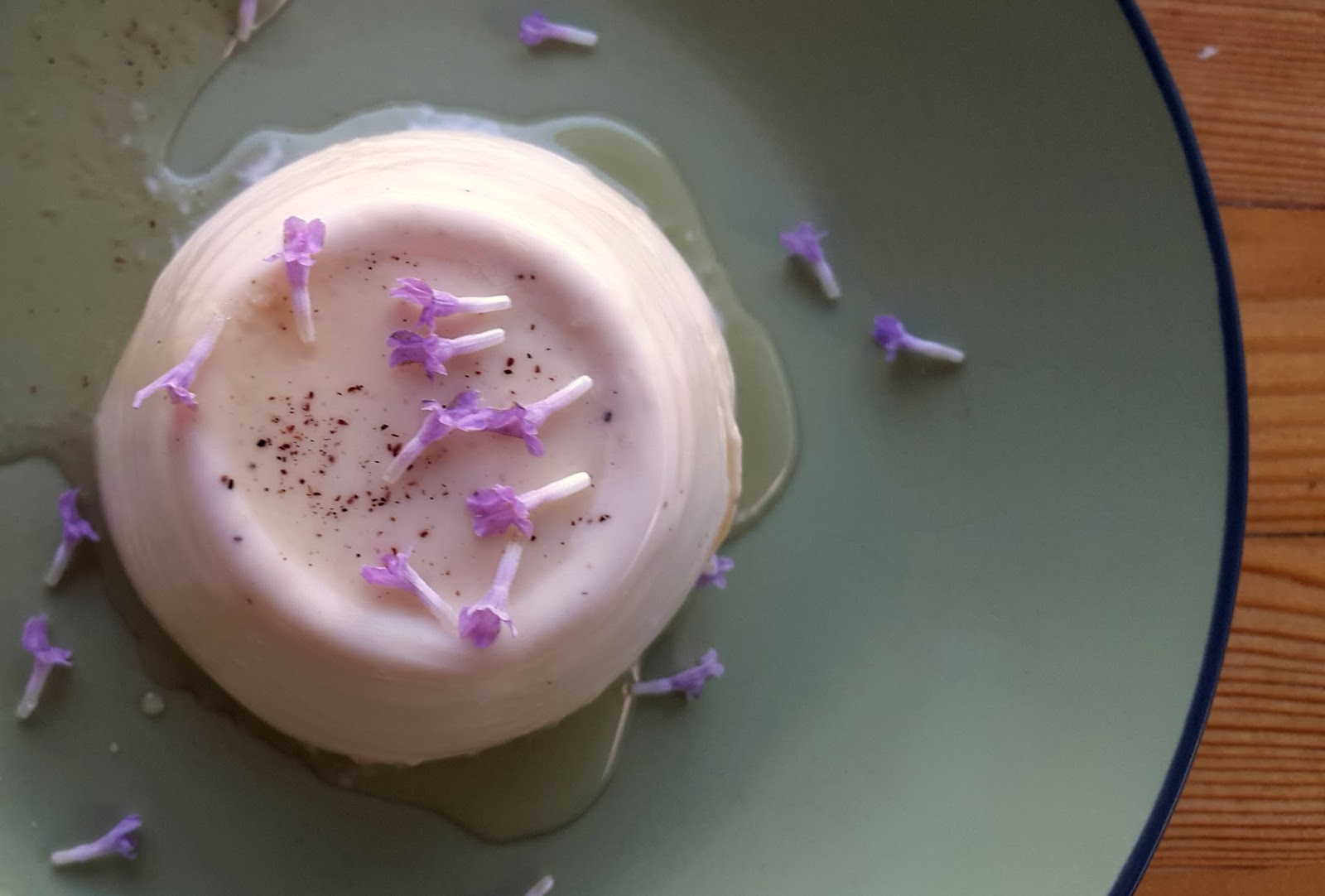
I made some agave dressing to accompany my panna cottas and it worked really well with the lavender. Mix agave syrup and lemon juice in a small pot and let it boil for a few minutes so that it thickens a little. Remove from heat, add lavender blossoms and leave for 15 minutes the same as with the panna cotta, then remove the blossoms.

You can freely adjust the amount of agave syrup and lemon juice to your taste, but these amounts are tested and best in my opinion. You can buy agave syrup in most supermarkets here, but you could also substitute agave with honey.


If you are working with silicone moulds, just gently pull the edge of the mould so that it separates from the panna cotta and do this all around the mould. The panna cotta should slide out of the mould onto your plate.

With hard mould try to flip the mould on your plate and tap the bottom of the mould and the panna cotta may slide out. If this doesn't work, run your knife along the rim of the mould and then flip it. 

Gently drizzle the agave dressing over the panna cotta, rather less than more and later increase the amount if you feel it is not strong enough. Otherwise you may overpower the gentle lavander taste. Decorate with a few lavender blossoms.